
The members of the Reserve Bank of India's (RBI's) Monetary Policy Committee (MPC) voiced different views on the interest rate and stance, with two of them indicating they may not vote for further rate increases even if Governor Shaktikanta Das and Deputy Governor Michael Patra maintain bringing down inflation as their primary objective, the minutes of the December review of the monetary policy showed. The other two members remained neutral. The MPC increased the policy repo rate by 35 basis points (bps) - which was lower than the previous three hikes of 50 bps. The repo rate has been hiked by 225 bps to 6.25 per cent since May this year.

The Lok Sabha elections in 2024 are not a consideration when it comes to monetary policymaking, said Reserve Bank of India governor Shaktikanta Das to underscore the central bank's commitment to controlling inflation. "It's not possible for me to comment what we do in the next MPC (Monetary Policy Committee), but one thing I can tell and I would like to make it very clear-that the fact of elections coming up in 2024 is not a factor at all so far as monetary policymaking is concerned. "Monetary policymaking is for checking (and) controlling inflation," Das said at the Business Standard, BFSI Insight Summit.

Liquidity in the banking system has slipped into a deficit for the first time in three weeks, prompting banks to borrow the largest quantum of funds from the Reserve Bank of India (RBI) in around a month and a half. The key catalyst for the sudden tightening in liquidity was due to outflows on account of advance tax payments, which occur towards the end of a quarter. Analysts also cited other factors such as a currency leakage and possible interventions by the RBI in the foreign exchange market, which contributed to the tighter liquidity conditions.

Despite the demonetisation of 2016 and the rise in digital transactions that followed, the economy's dependence on cash has remained as high as ever. So when the Reserve Bank of India (RBI) introduced a pilot project of its version of digital cash - called the central bank digital currency (CBDC) - on December 1, many questions were asked. Can the CBDC replace physical cash, even partially? Can it match cash in terms of convenience? Are CBDC transactions truly anonymous?

State-owned Punjab & Sind Bank is targeting salary accounts to boost the share of low-cost deposits. Swarup Saha, managing director and chief executive officer of the New Delhi-based lender, tells Manojit Saha that the bank may see gross non-performing assets (NPAs) fall below 8 per cent if there is resolution of the stressed assets.

The pilot project for central bank digital currency (CBDC) in the retail segment went live on Thursday with the Reserve Bank of India (RBI) issuing Rs 1.71 crore to four participating banks based on their indents. The central bank has identified four banks for the first phase of the pilot - State Bank of India, ICICI Bank, Yes Bank and IDFC First Bank - in four cities, Mumbai, New Delhi, Bengaluru and Bhubaneswar. The highest indent was received from one private sector bank.

Exactly a fortnight ahead of the Reserve Bank of India's (RBI's) next monetary policy review, a key market indicator of interest rates - the overnight indexed swap (OIS) - suggests that the central bank may tighten policy by 35 basis points and then refrain from further rate hikes. RBI Deputy Governor Michael Patra recently described the OIS as the primary instrument for hedging interest rate risk in India. The six-member Monetary Policy Committee (MPC) of the RBI will meet on December 5-7.

Banks looking to raise capital via bond sales to fund decade-high credit growth were compelled to put some of these debt issuances on hold amid a sharp rise in yields since late September, sources told Business Standard. A major private lender, Axis Bank, has not yet followed through with a planned issuance of infrastructure bonds worth around Rs 3,000 crore. This is because volatility in the bond market in late September led to investors seeking higher yields, sources said.

'We have delivered a bitter medicine. It will take time to work.'

Based on the current momentum, the funds likely to be raised through the RBI's relaxed window would be $3.5 billion-$4 billion.

The Reserve Bank of India (RBI) has given its approval to two Russian banks for opening special vostro account for rupee trade. Sberbank, JSC VTB - the largest and second largest bank of Russia - are the first foreign lenders to receive this approval after the central bank announced the norms on INR trade in July. Both lenders have branch presence in India. Earlier this month, state-run UCO Bank received the RBI's approval to open a special Vostro account with Gazprombank of Russia. While the Kolkata-based lender is in the process of opening the account, the bank has received requests from various foreign lenders for opening such an account.

The rupee has depreciated 9.7 per cent against the US dollar over a year and with the RBI stemming the rupee's weakness through dollar sales, its reserves have dropped to their lowest levels since October, 2020. The fall in reserves has widespread implications.

Several Indian banks have alerted their customers not to download apps from any source other than official app stores. Banking customers are being targeted by a new type of mobile banking malware campaign using SOVA Android Trojan. This malware captures the credentials when users log onto their net-banking apps and access bank accounts. The new version of SOVA appears to be targeting more than 200 mobile applications, including banking apps and crypto wallets.
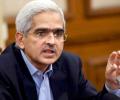
The increasing involvement of Big Tech in the financial system could give rise to concentration risk and there are potential spillovers, which call for closer attention, Reserve Bank of India (RBI) Governor Shaktikanta Das said on Tuesday. "...enormous amounts of consumer data is being generated and leveraged upon by a few entities (the so-called Big Tech) by virtue of their huge customer base. "Such developments raise concerns on concentration risk and potential spillovers as their level of engagement with the financial system strengthens in the years to come," Das said at the Global Fintech Fest 2022.

Surplus liquidity in the banking system as measured by absorption of excess funds by the Reserve Bank of India (RBI) fell sharply at the end of the last week due to outflows on account of advance tax payments. According to the RBI data, the net liquidity absorbed by the central bank on September 16 was at Rs 3,243.57 crore, much lower than the average of Rs 56,809.92 crore in the preceding four days of the week. The average absorption of funds by the RBI so far in September is at Rs 1.13 trillion, against the average of Rs 1.2 trillion in the previous month, the data showed.

Russian traders have started asking for payments in ruble for their exports to India in a move that could derail trade between the two countries which gathered pace after the war in Europe. This is because Indian importers are unable to pay in ruble. The India-Russia trade gathered pace after Vladimir Putin invaded Ukraine in February this year. In the April-June quarter, India's imports from Russia were valued at $9.27 billion, up 369 per cent year on year.
With retail inflation surprising on the upside, the six-member monetary policy committee (MPC) of the Reserve Bank of India (RBI) is expected to increase the repo rate by 35-50 basis points (bps) in the review scheduled for September 28-30. According to economists, the central bank will continue to focus on bringing inflation down even though economic growth has remained sluggish. Data released by the government on Monday showed that the consumer price index (CPI)-based inflation increased by 7 per cent year-on-year (YoY) in August, thus, staying above the upper tolerance limit of the central bank for all the eight months of 2022.

If there was one event that made the month of August stand out, it was a strengthening of the dollar index to levels last seen only 20 years ago, as the Federal Reserve dispelled all doubts about its intention to continue raising interest rates. Predictably, most currencies suffered against the US unit, with the bulk of the losers belonging to the emerging markets pack. Amid the volatility, the rupee, however, has displayed significant resilience and fared much better than most of its peer currencies.

Commemorating 75 years of India's independence, SBI has launched a 75-day Utsav Deposit Scheme, offering 6.10 per cent for fixed deposits. Senior citizens will get an additional 0.50 per cent and the offer is on until October 30, SBI said.
The Reserve Bank of India's (RBI's) outstanding net forward purchases of US dollars fell by more than 50 per cent from the last quarter of FY22 to $30.86 billion in the June quarter (Q1). The net forwards position was at $65.79 billion at the end of the last fiscal year. The purchases fell by $18.33 billion in June as the central bank intervened in both the forwards and the spot market in order to protect the rupee from excessive depreciation in the face of a widening trade deficit.
 © 2026 Rediff.com - Investor Information - Advertise with us - Disclaimer - Privacy Policy - Sitemap - Feedback - About us - Terms of use - Grievances